von

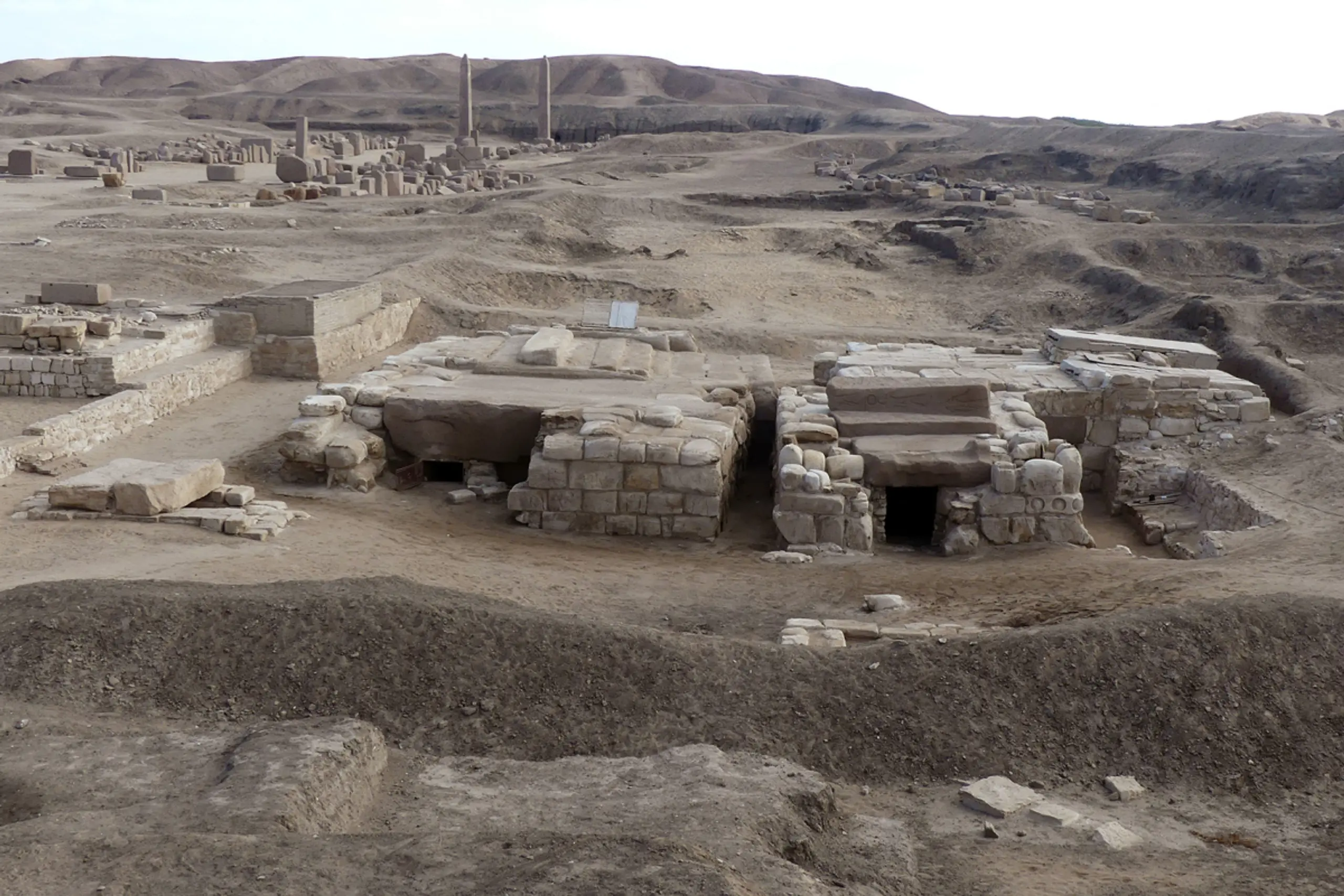
Das etwa um das Jahr 1000 vor Christus gegründete Tanis liegt im Nildelta und diente den Pharaonen der 21. Dynastie als Hauptstadt. Eine Gruppe von Archäologen brauchte Anfang Oktober zehn Tage, um die 225 sorgsam in einem Grab der Nekropole aufgereihten Figürchen - so genannte Uschebtis - zu bergen.
Uschebtis dienten in der Mythologie der alten Ägypten im Jenseits als Diener der Verstorbenen. Mehr als die Hälfte der jetzt gefundenen Fayence-Figuren stellt Frauen dar - laut Payraudeau eine Seltenheit. In die Statuetten geprägte Kartuschen lösten den Forschern zufolge auch die Frage darum, wer in dem Grab beigesetzt war: Es handelt sich um Pharao Scheschonq III., der um 830 bis 791 vor unserer Zeitrechnung herrschte.
This undated handout photograph released on November 25, 2025 by MFFT-EPHE/PSL shows the royal necropolis of Tanis (San el-Hagar), where 225 funerary statuettes knonw as ouchbetis have been found. The French Excavation Mission at Tanis (École pratique des Hautes Études - PSL), led by Professor Frédéric Payraudeau (Sorbonne University) and Dr Ahmed Nakshara (Ayn Shams University), has discovered found a set of 225 royal funerary statuettes (ouchbetis) in their original location, near an anonymous pink granite sarcophagus. This is the first time since 1946 that such an important discovery has been made in the royal tombs of Tanis. The French mission has been continuing its study and conservation programme there since 1929, in close collaboration with the Egyptian Ministry of Tourism and Antiquities and the local Egyptian team. (Photo by Frederic PAYRAUDEAU / MFFT - EPHE/PSL / AFP) / RESTRICTED TO EDITORIAL USE - MANDATORY CREDIT "MFFT-EPHE/PSL" - NO MARKETING - NO ADVERTISING CAMPAIGNS - DISTRIBUTED AS A SERVICE TO CLIENTS